Podcast Episode 07 · Companion audio · 53:35

How Democracies Rot and Civilians Survive

A companion audio overview to Every Government Dies, examining democratic erosion and institutional decline through friction, workarounds, substitution, fragmentation, contested authority, recovery capacity, civilian continuity, and the handoff into the Built To Resist transition framework.

53:3598.7 MBAAC · 44.1 kHz stereo · first-party download
Share this episode

Share the episode—or the exact moment.

Timestamp sharing works from the local player. No social-network SDKs or tracking pixels load with this page.

Need social artwork? Open the Share Studio →
Video edition · YouTube

The Architecture of Decline: How Systems Crumble | Every Government Dies

This is the matched YouTube video edition supplied for this podcast episode. The first-party M4A player and download remain the canonical audio edition on Built To Resist.

Free companion book

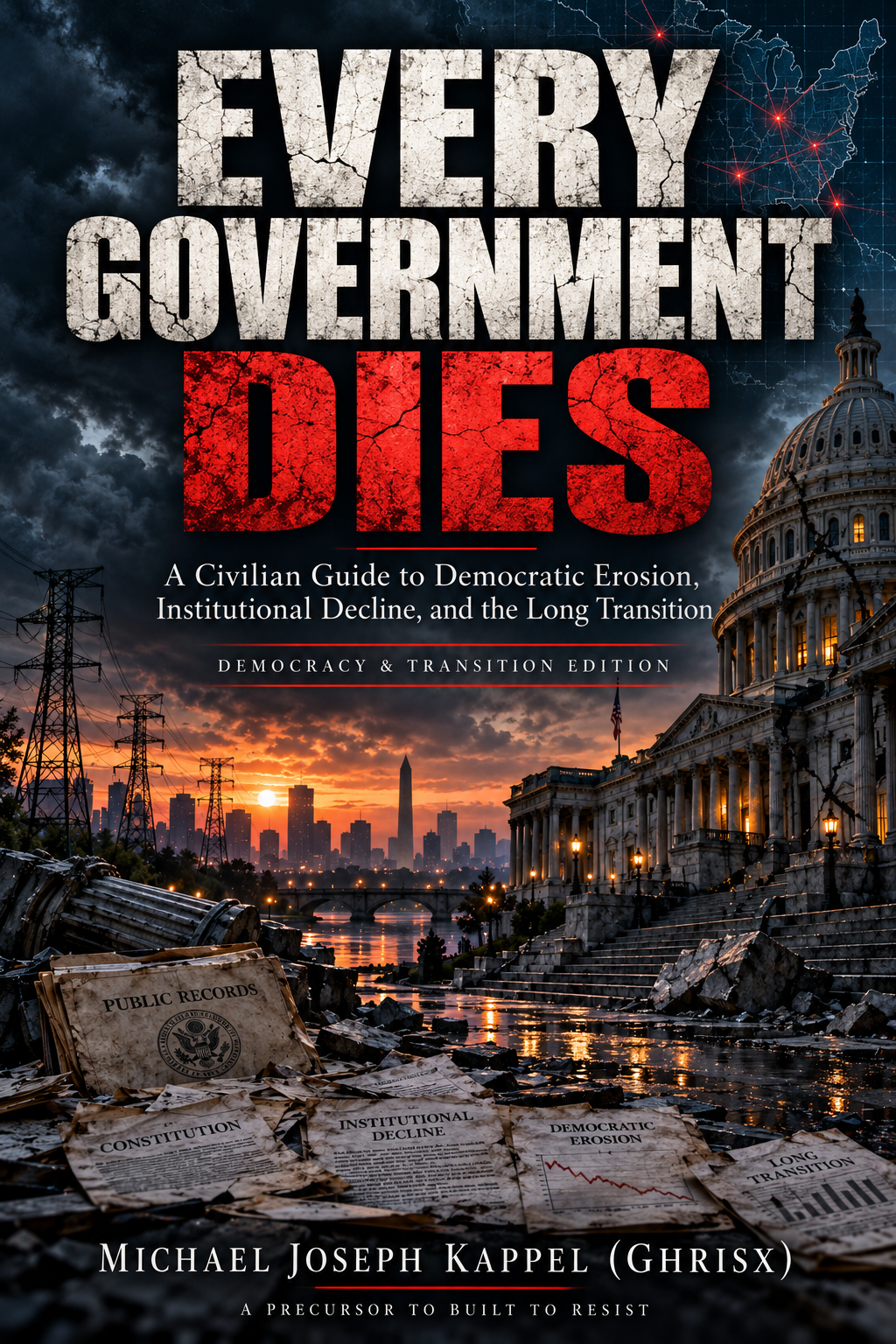
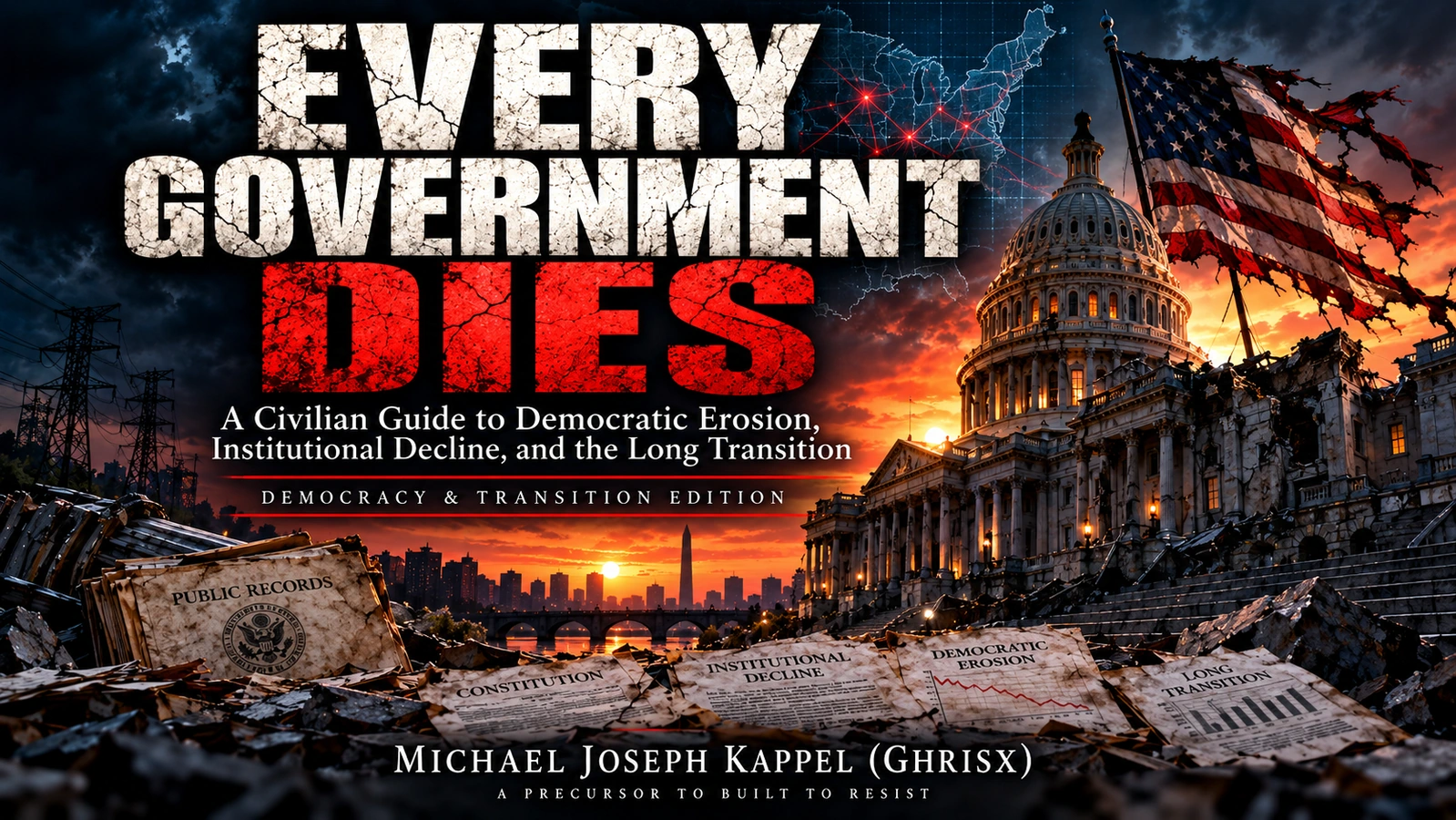
Every Government Dies: Democracy & Transition Edition

A Civilian Guide to Democratic Erosion, Institutional Decline, and the Long Transition. The book is explicitly framed as a precursor to Built To Resist.

Every Government Dies book cover

The written edition maps the long transition from functioning friction through chronic failure, workaround society, substitution, fragmentation, contested authority, rupture, and recovery. It also includes role-based playbooks, system case files, field appendices, and a research atlas.

Episode guide

The long transition before rupture.

These are thematic guideposts derived from the companion book and the episode framing, not claimed timestamped chapters or a transcript of the audio.

Recognition

Friction before failure

Recurring delays, vacancies, deferred maintenance, appeals that stop working, and institutions that survive by transferring administrative burden onto citizens.

Adaptation

Workarounds and substitution

How competent people keep systems alive through informal fixes—and how those fixes can become opaque parallel infrastructure or new private gatekeepers.

Fragmentation

The map becomes more important than the flag

Institutional reality can vary by geography, wealth, network, jurisdiction, and provider long before a whole country experiences the same condition.

Authority

Contested rules without a collapse fantasy

The civilian question is practical: which order has jurisdiction, what can be reversed later, what records prove why a decision was made, and which essential services can remain neutral.

False positives

Recovery is evidence

Protests, recessions, blackouts, scandals, and conflict do not automatically mean collapse. A useful warning framework also defines what improvement and institutional recovery would look like.

Continuity

Support the function without surrendering judgment

The book separates essential functions—water, hospitals, schools, records, payments, information—from allegiance to particular officeholders or factions.

Handoff

Where Every Government Dies ends

At rupture, the problem changes from detecting deterioration to keeping civilians alive, essential systems functioning, records intact, and future institutions accountable. That is where Built To Resist begins.

Boundary

Not a current-collapse prediction.

The companion book explicitly says its stages are descriptive, reversible, and not a prediction that the United States is presently at a particular stage. The episode page preserves that boundary and does not convert a warning framework into an electoral or collapse forecast.

Audio duration, size, codec, sample rate, and SHA-256 are derived from the uploaded M4A. The written episode guide follows the owner-supplied companion book; no verbatim transcript or exact audio chapter timestamps are claimed.

Audio SHA-256: dd4c2ed67a0b07e196a0e6d596eed06d577bc7f09712e9117e1932ada0658ad2